Schools Program
A microforest your students plant, watch grow, and hand to the next class.
A dense native forest - 300 to 1500 trees and plants - built on your school grounds or nearby public land. Students help design it, plant it, and monitor it as part of their learning. The community funds it and a local leader runs the project. Your school provides the site and the students. We provide the support to make it happen.
Schools we're working with
St Peter's Anglican College, NSW
Broulee Microforest
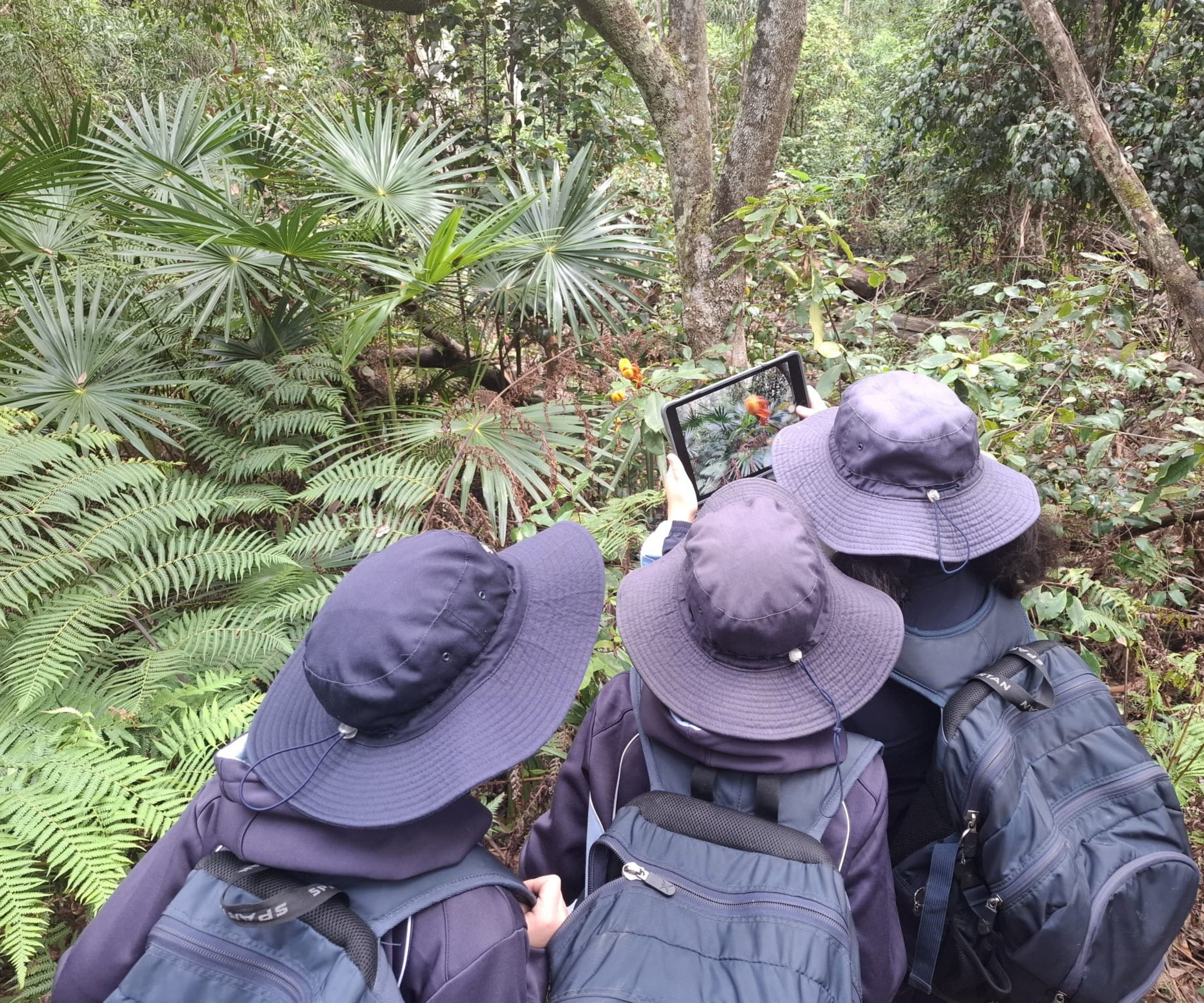
Evelyn Scott School, ACT
Denman Prospect Microforest
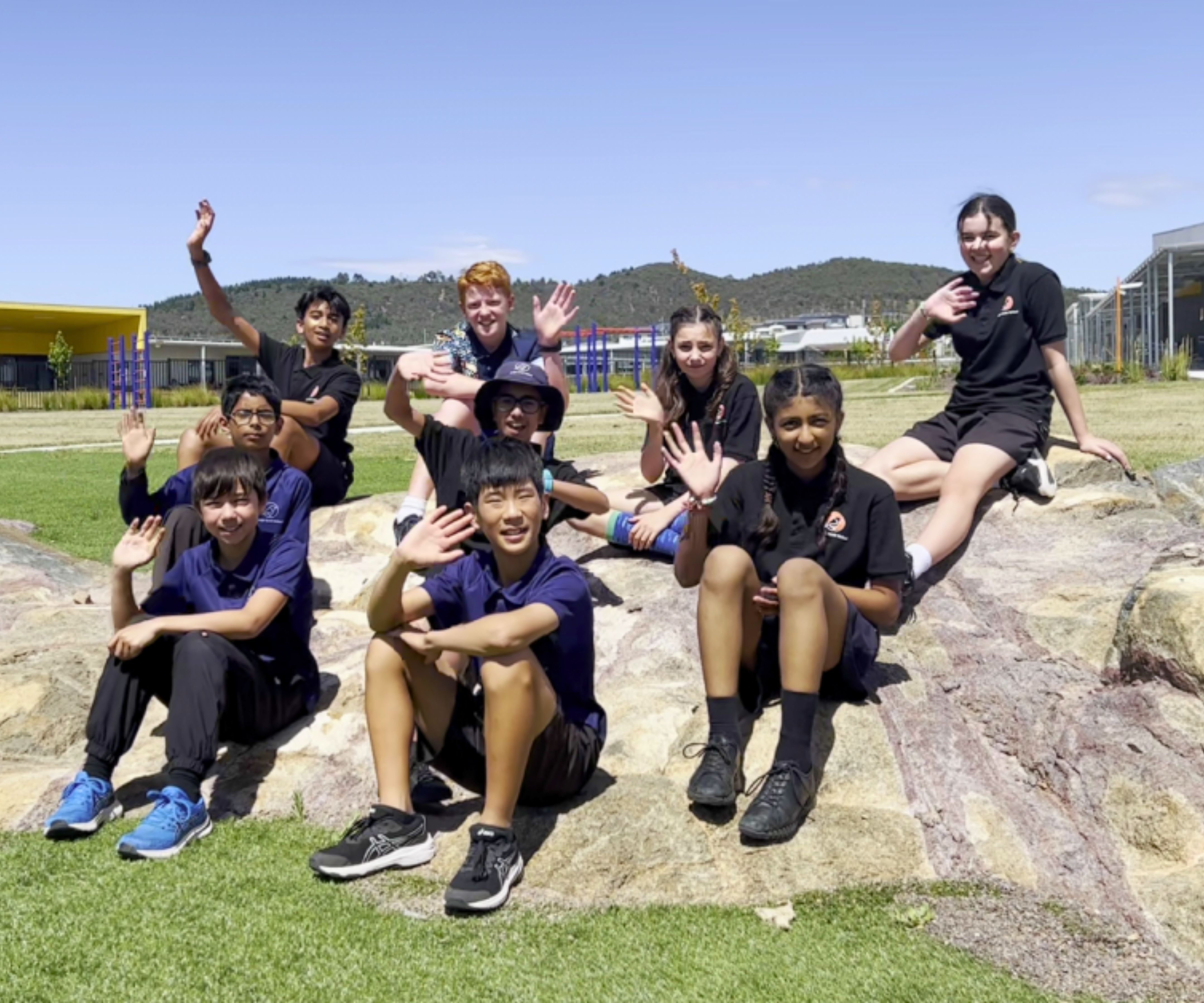
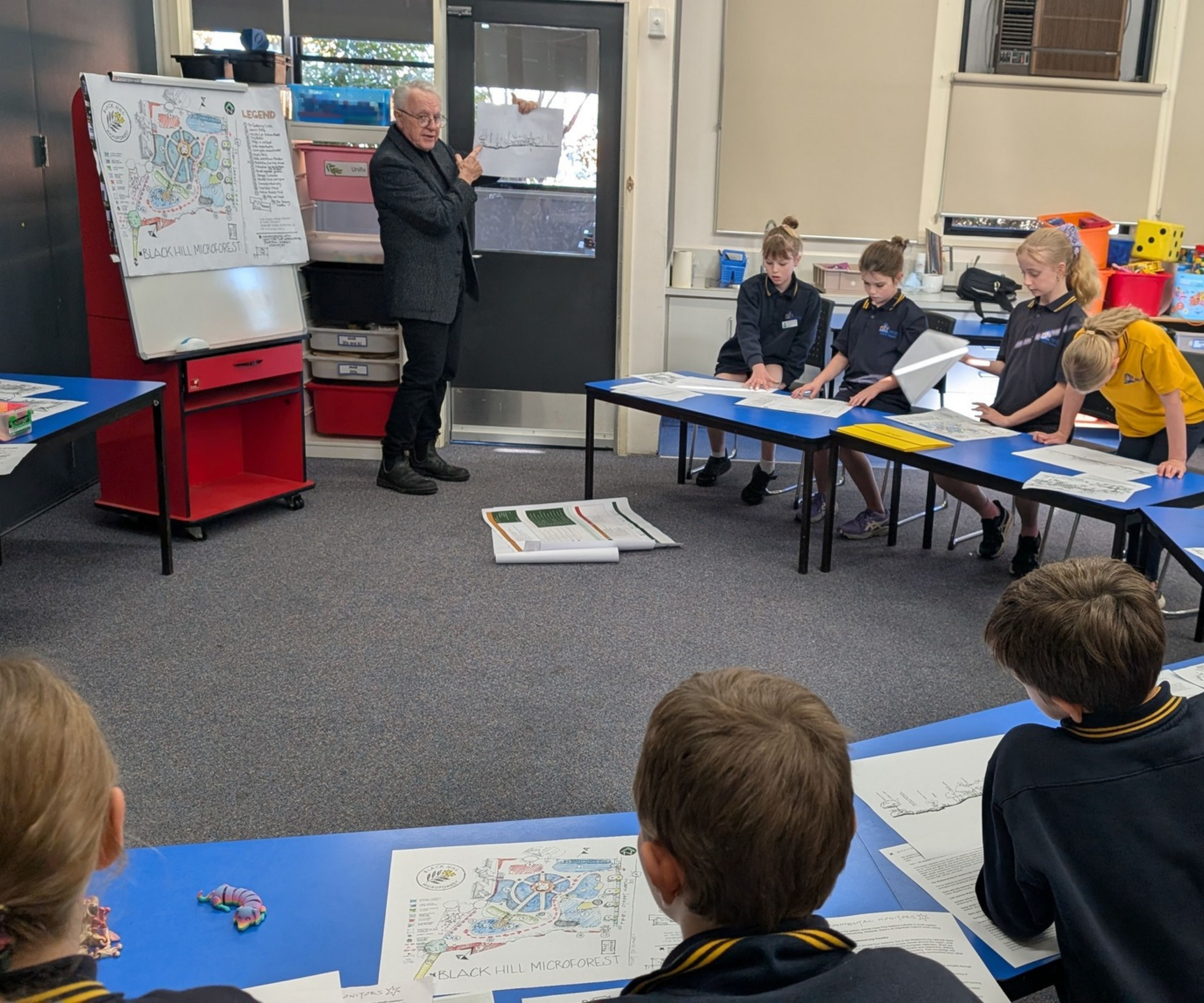
Black Hill Primary School, VIC
Black Hill Microforest
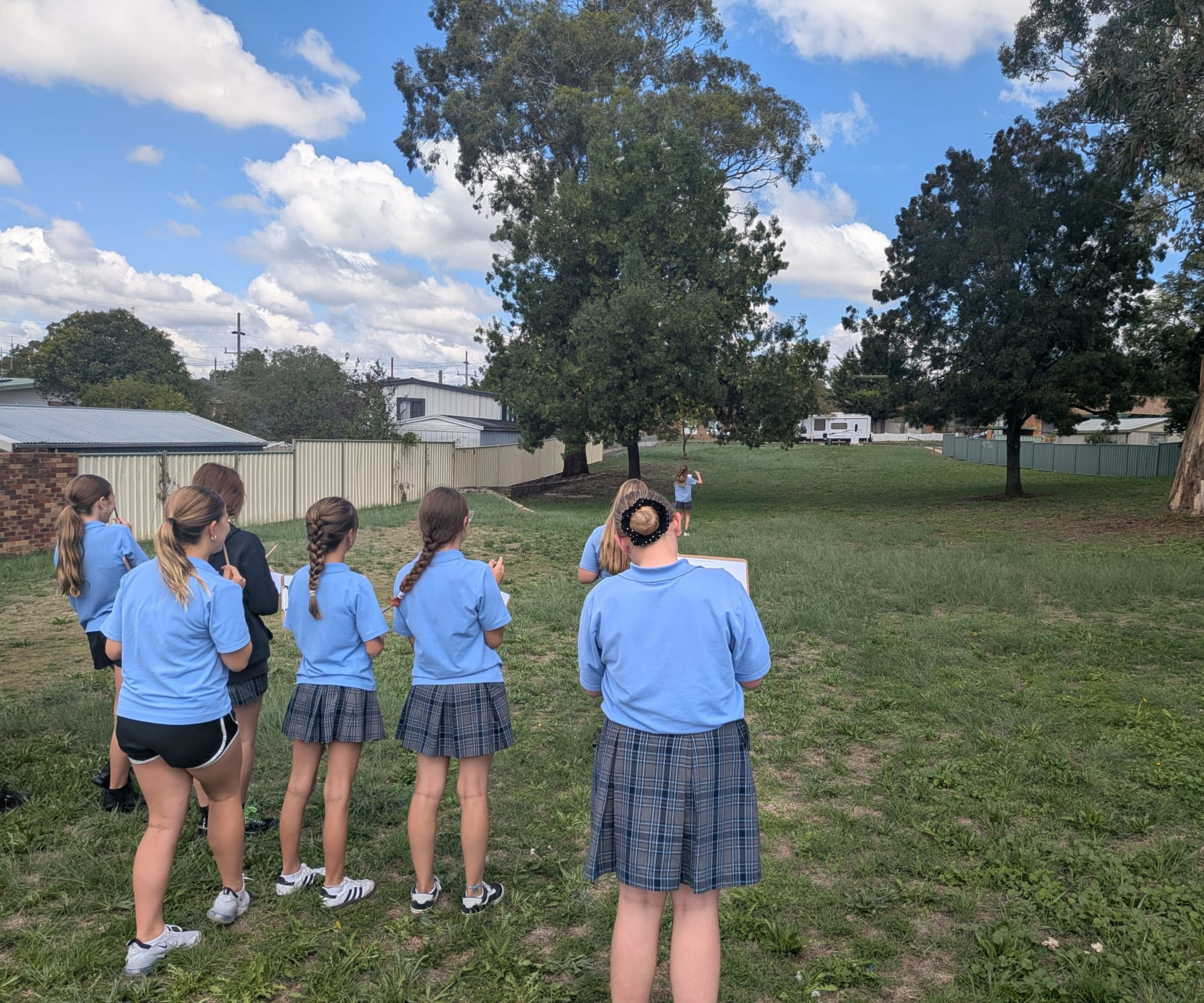
Karabar High School, NSW
Karabar Microforest
Backed by Wedgetail
Our school program is supported by leading biodiversity philanthropists

We're proud to partner with Wedgetail - founded by CEO Lisa Miller and Canva co-founder Cameron Adams - to develop and pilot our school-based microforest model. Their support is enabling us to create replicable blueprints, develop rigorous impact reporting frameworks, and prove what's possible when community leadership meets institutional continuity.
The Broulee Microforest at St Peter's Anglican College serves as our flagship pilot: a comprehensive project restoring endangered Coastal Littoral Rainforest while integrating Year 4 curriculum and developing templates for schools nationally.
What your school gets
Cooler grounds.
Dense native planting drops air temperature by several degrees. Somewhere to be outside that isn't baking asphalt or shadeless grass.
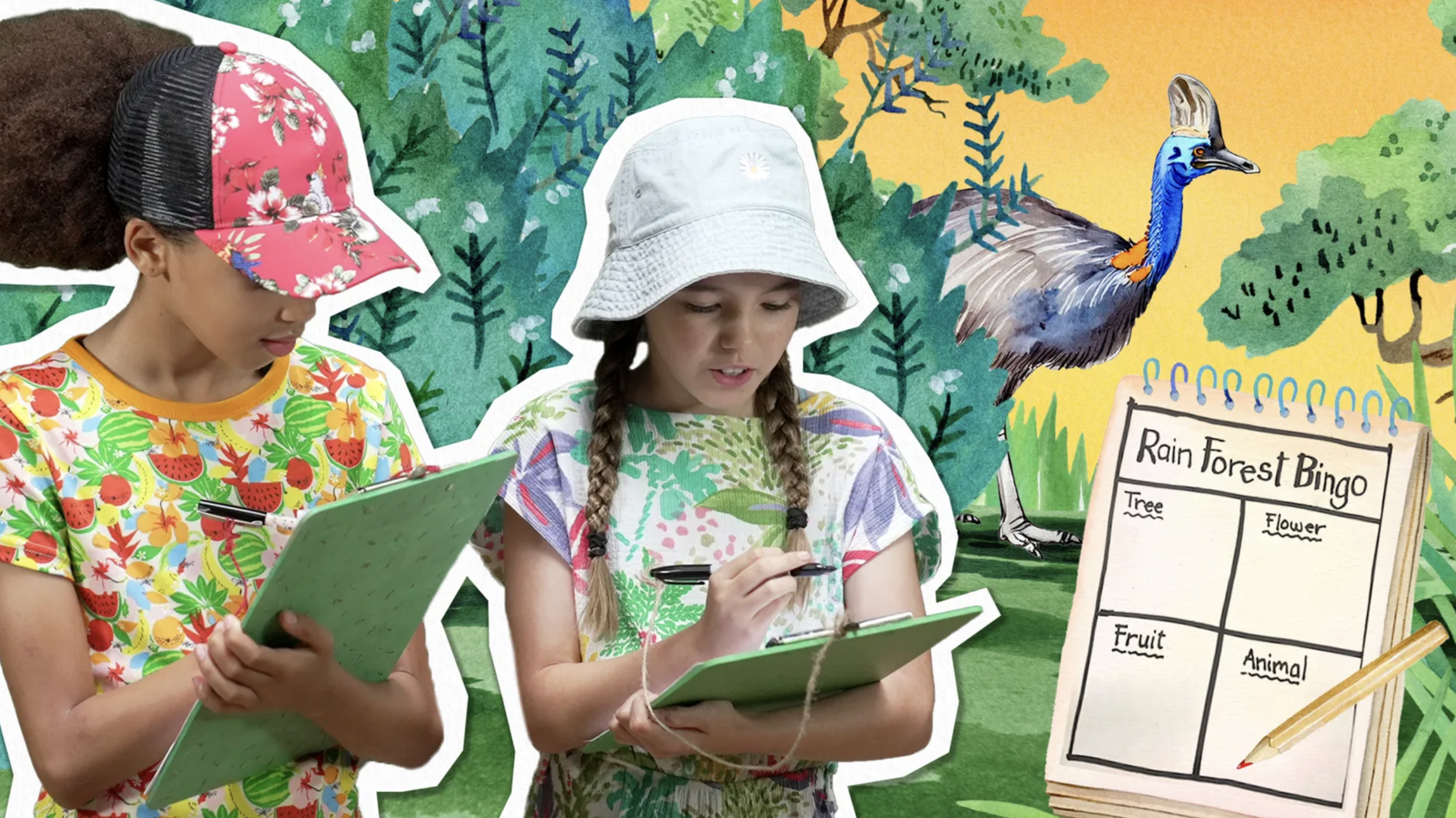
Curriculum that lives outside.
Microforests connect to science, maths, English and HSIE across Years 3-8. Students collect real data and write about what they observe. We can provide unit frameworks aligned to NSW, ACT and Victorian syllabus outcomes. Teachers can pick them up and run with them.
Engaged students.
This isn't a poster project. Students see something they helped create grow taller than them, year on year.
Community connection.
Planting day brings parents, neighbours and students together. The forest becomes a visible symbol of what the school and community built together.
Biodiversity on your doorstep.
Birds, insects, lizards. They show up fast. Students notice.
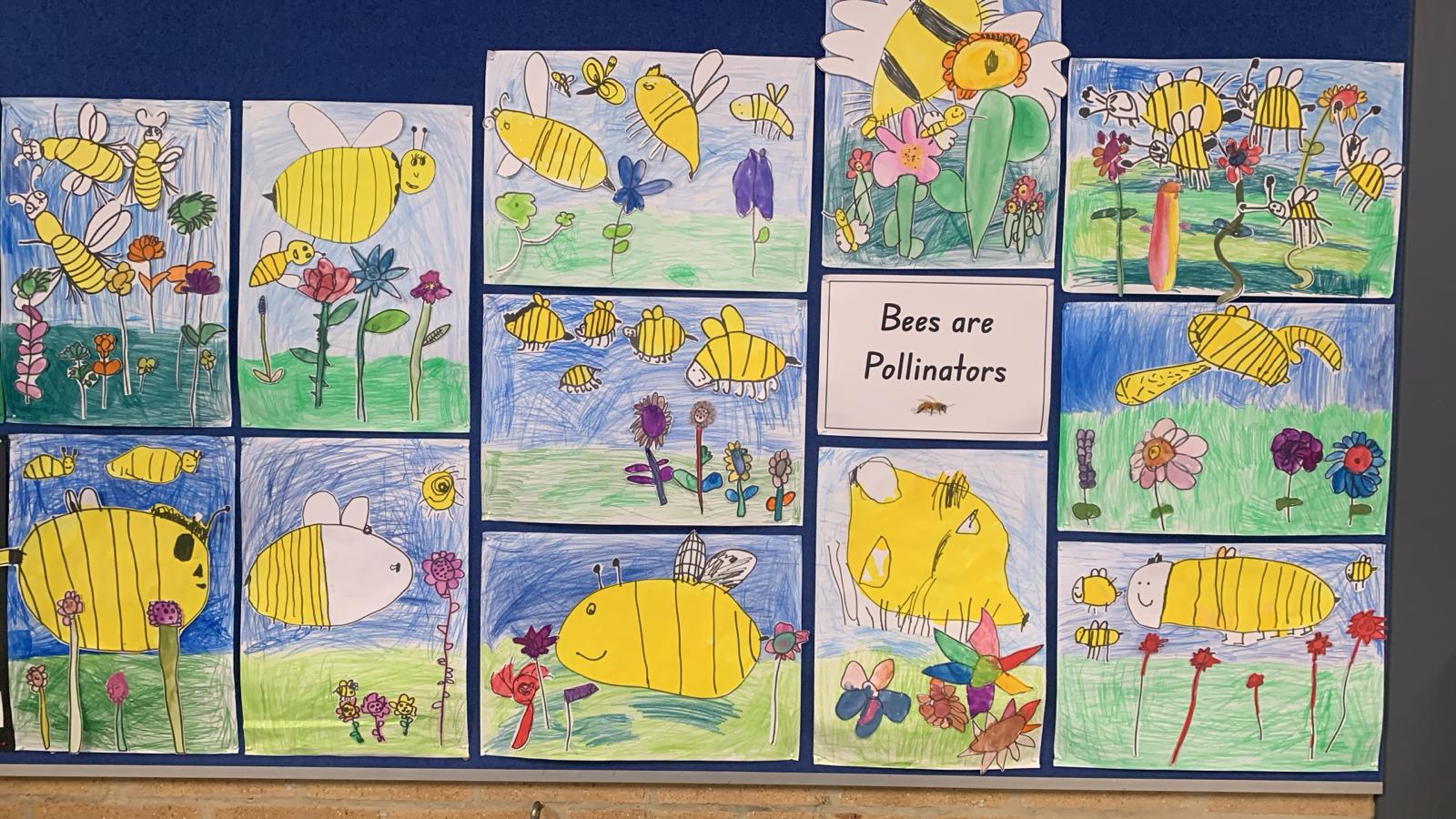
St Peter's Anglican College kindergarten students keeping buzzy 🐝 as their Broulee Microforest takes shape.
What it involves
For the school:
Agree to host or partner with a site. Nominate a staff contact. Allow student involvement in one design workshop, planting day, and a few monitoring sessions per year built into existing classes. That's it.
For the project leader:
The leader is usually a teacher or parent, sometimes both working together. You don't need experience. You need commitment and a few hours a week during active phases. We provide onboarding, templates, approvals support and regular check-ins.
On size and cost:
School microforests range from around 500 plants to 1,500+. Smaller projects need no earthworks, raise $5-12k, and can be planted within a few months. Larger projects with co-design and outdoor classrooms take 12-18 months and raise $35-50k. The method is what matters: native species, planted densely, designed to grow fast and look after itself.
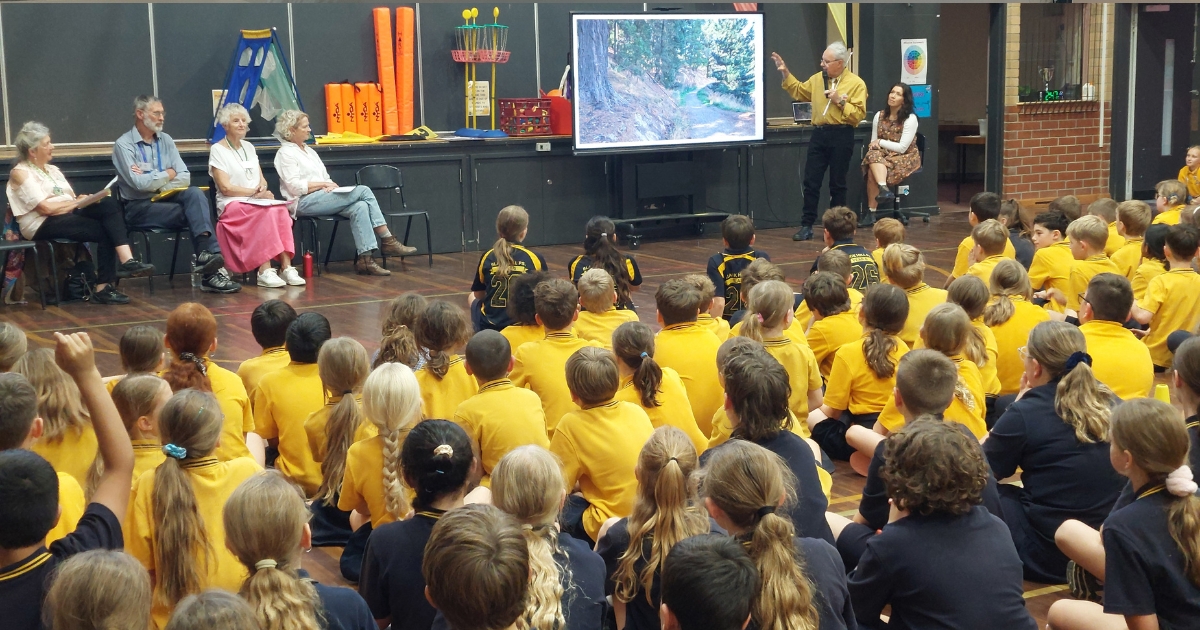
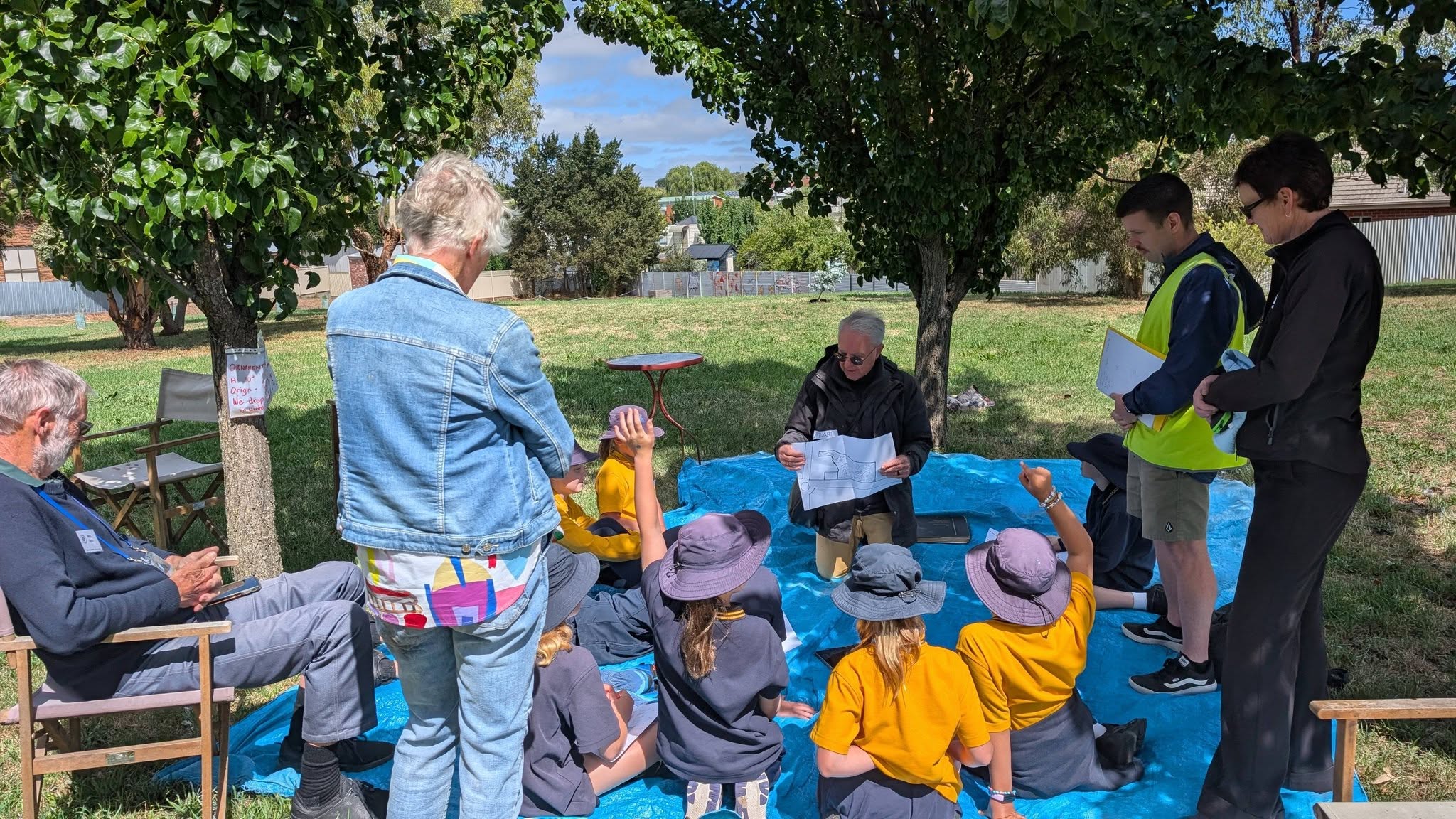
Stuart Porteous, Project Co-Lead of the Black Hill Microforest presenting to Black Hill Primary School students.
Common questions
Does our school have to pay for this?
How much time does this take school staff?
Who's responsible for the site?
Which year levels does this suit?
How long does the whole process take?
What does the Microforest Collective provide?
If your project is accepted, our platform gives you the structure, systems and backing to lead a microforest with confidence — without carrying the admin, risk or guesswork alone.
Clean, central fund management
All donations and grants for your site flow through our not-for-profit structure. You never handle public money personally. Our bookkeeper pays invoices directly, keeps everything auditable, and you can request a balance or statement anytime.
A ready-made fundraising engine
Your project gets its own fundraising page on our platform, with secure payments, automatic receipting and reporting. You focus on the story; we run the infrastructure that makes it work.
The full project toolkit
Guides, templates, checklists, budgets, comms assets, species lists, risk forms, planting-day materials and maintenance guides — all structured around the phases of a microforest project.
Design and ecological guidance
Advice on layout, species selection and ecological integrity so your site is grounded in best practice, not guesswork.
Approvals and risk guidance
Clear steps for landholder permission, safety expectations and compliance. You’re not navigating bureaucracy or uncertainty alone.
Governance you can rely on
Standards, boundaries and reporting built into the system — giving councils, donors and partners confidence that your project is safe, credible and well-run.
Light-touch coaching
Short, practical check-ins when you need clarity or an unblocker. Support without micromanagement.
Connections into our network
Introductions to nurseries, suppliers, designers, ecologists and other leaders so you’re not building in isolation.
You lead the project locally.
The platform provides the structure that makes it possible.